A surgical scar goes through predictable stages of redness, swelling, and itching as it heals — but a small number of incisions develop a true infection that needs medical attention within hours, not days. This guide walks through exactly what to check, in what order, and when normal healing crosses the line into infection risk in 2026.
- A scar is infected when redness spreads, drainage turns yellow-green, or fever hits 100.4°F — see a doctor same day.
- Normal healing swelling peaks by day 3-4 then fades; redness worsening after day 5 signals infection, not healing.
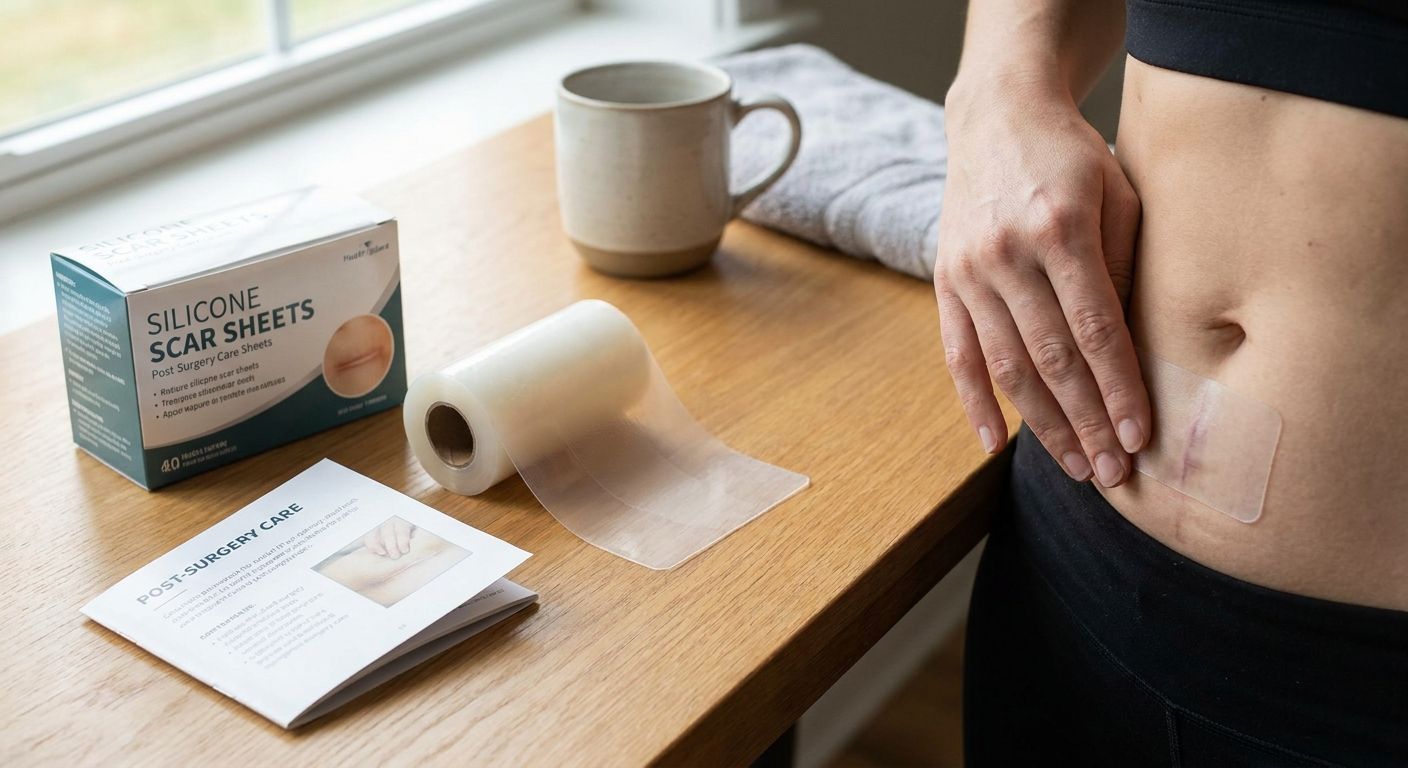
- Rejûvaskin silicone scar gel and Scar Heal Kits are for closed, infection-free scars — never apply to open or draining wounds.
- Foul odor plus increasing pain after 72 hours is the clearest sign a scar is infected and needs a same-day call to your surgeon.
Why this matters
Most surgical wound infections show up between day 3 and day 10 after the procedure, right when the incision looks worse to the untrained eye than it actually is. Mistaking normal healing for infection means an unnecessary ER trip. Missing a real infection means a delayed diagnosis that can turn into a wound that reopens, scars poorly, or requires antibiotics weeks later than it should have.
Once an incision is fully closed, dry, and cleared by your surgeon, that's the point where scar management — not infection treatment — becomes the priority. Itching during scar healing is a separate, normal part of that later stage and is not, on its own, a sign of infection.
What you'll need
- Clean hands or exam gloves before you touch the incision
- A well-lit mirror or your phone camera to photograph the scar daily
- A pen to mark the outer border of any redness
- A thermometer to check for fever twice a day
- Your surgeon's discharge paperwork with the expected healing timeline for your specific procedure
- Once the wound is closed and infection-free: a silicone scar gel for ongoing scar management
The steps
1. Compare the wound to your surgeon's healing timeline
Most discharge instructions include a day-by-day guide — redness and mild swelling through day 3-4, gradual fading by day 7-10, and a closed, dry incision by day 14 for most surgical wounds. Pull that sheet out before you panic over normal healing. A wound that looks "worse" on day 2 than day 1 is expected; a wound that looks worse on day 7 than day 4 is not.
Common mistake: comparing your incision to photos of someone else's surgery online instead of your own surgeon's timeline for your specific procedure.
2. Mark and monitor the redness border
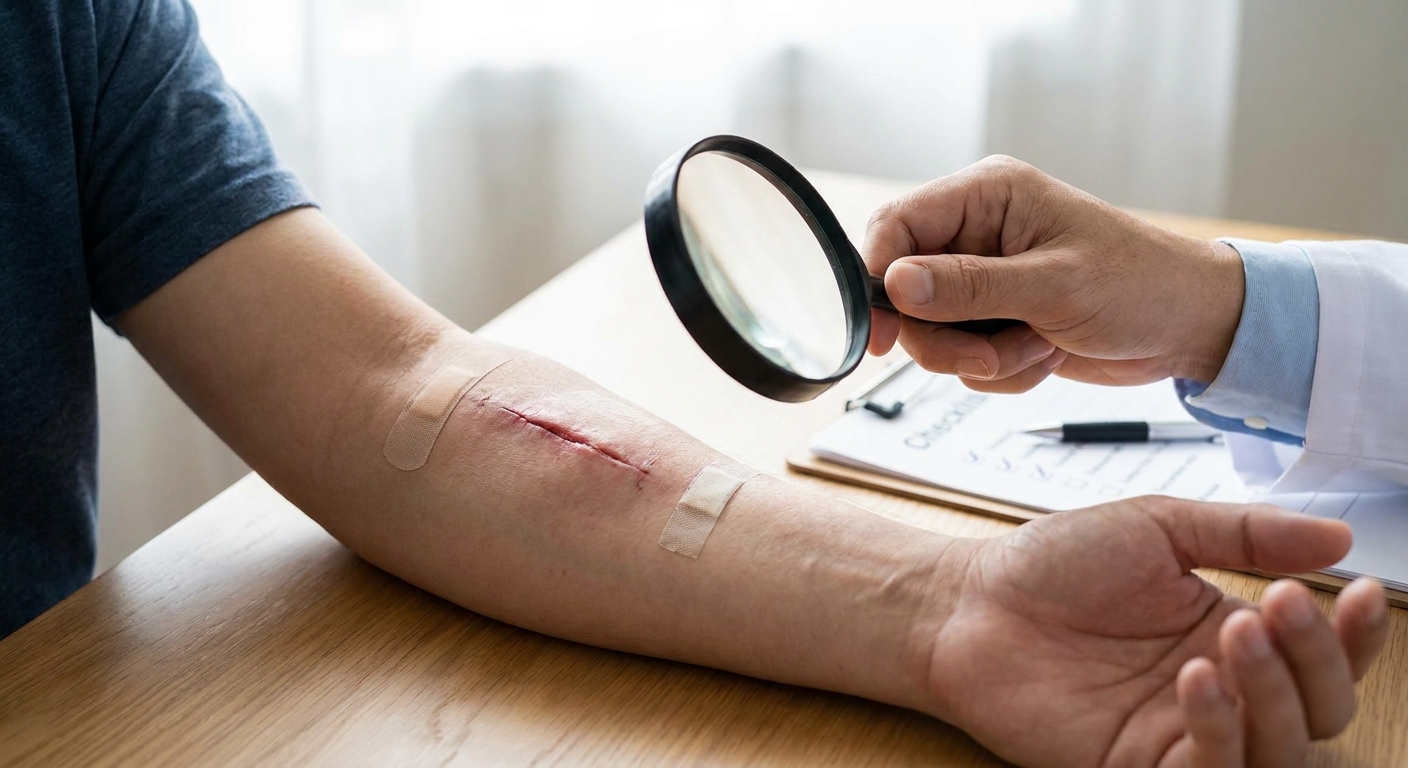
Use a pen to trace the outer edge of any redness around the incision, then check it again in 24 hours. Redness that stays within the line or shrinks is normal inflammation. Redness that spreads past the line — especially if it expands more than a quarter inch in a day — is one of the clearest signs a scar is infected.
3. Check for heat and swelling with the back of your hand
Press the back of your hand (not fingertips, which are less sensitive to temperature) against the skin around the incision and compare it to skin elsewhere on your body. Mild warmth in the first 72 hours is normal circulation at work. Skin that feels distinctly hot and is also increasingly swollen after day 4 needs a call to your surgeon that day.
4. Inspect drainage color and odor
A small amount of clear or light pink fluid (serous drainage) in the first 48-72 hours is normal. Yellow, green, or cloudy discharge, or any drainage with a foul odor, is not — these are hallmark signs of a wound infection and warrant same-day medical evaluation.
Common mistake: confusing dried blood (which can look brownish-yellow once it flakes) with pus. If you're unsure, photograph it and send the image to your surgeon's office rather than guessing.
5. Take your temperature twice a day
A fever of 100.4°F (38°C) or higher, especially paired with chills, is one of the most reliable systemic signs of infection and should never be ignored, regardless of how the incision looks. Track it morning and evening for the first 10-14 days after surgery.
6. Track the pain trend day to day
Pain should trend downward after the first 48-72 hours, even with medication adjustments. Pain that increases, or that returns sharply after it had been improving, is a red flag — particularly when it's localized to one spot on the incision rather than general soreness across the area.
7. Check for wound edge separation
Gently look (don't press) for any gap opening along the closed edges of the incision, sometimes called dehiscence. A wound that was fully closed and starts separating, especially with new drainage or bleeding, needs same-day attention — this is not something to monitor at home for another 24 hours.


If redness spreads past the pen mark within 24 hours, call your surgeon — don't wait for the follow-up appointment.
Troubleshooting
- The skin looks red every time you shower. Warm water increases blood flow temporarily; check the color again 30 minutes after drying off. If it fades back to your baseline, it's not infection.
- The incision itches a lot around day 10-14. Itching is a normal sign of nerve regeneration and collagen remodeling during healing, not an infection symptom on its own, as long as there's no new redness, heat, or discharge alongside it.
- There's a small crust that looks yellowish. Dried serous fluid or blood often turns yellow-brown as it dries. True pus is thicker, often has a foul smell, and increases rather than stays static day to day.
- Steri-strips or tape are causing irritation at the edges. This is a skin reaction to adhesive, not the incision itself — check that the redness is confined to where the tape touched, not spreading from the wound line.
- You had a fever the day of surgery. A mild fever within the first 24 hours post-op is common and often resolves on its own; a fever that appears new on day 5-7, after you'd been fever-free, is the more concerning pattern.
Tools and resources
- Your surgeon's or hospital's after-visit summary with the expected healing timeline
- A thermometer and a pen for daily monitoring in the first two weeks
- Photos taken in the same lighting daily to compare objectively rather than relying on memory
- Once cleared for scar care: silicone scar gel applied to a fully closed incision, twice daily, per the product instructions
What to do next
Once your surgeon confirms the wound is closed and infection-free, the focus shifts from monitoring to scar management. Rejûvaskin's clinically-proven scar formulas are built for that stage, not the healing stage — never apply scar gel or silicone sheeting to an open, draining, or actively infected incision.
FAQ
What are the first signs a surgical scar is infected?
The earliest signs are increasing redness that spreads beyond the original incision line, warmth, and swelling that gets worse instead of better after day 3-4. Yellow or green drainage and a fever above 100.4°F are stronger confirming signs and mean you should contact your surgeon the same day.
How long does normal redness last after surgery?
Normal post-surgical redness typically peaks around day 3-4 and fades noticeably by day 7-10 for most incisions. Redness that is still expanding or getting darker after day 5 is not typical healing and should be checked by a medical provider.
Is yellow discharge from a scar always infection?
Not always — light yellow, clear, or pink serous fluid in the first 48-72 hours after surgery is normal. Thick yellow or green discharge with a foul odor, especially after day 4, points toward infection and needs same-day evaluation.
Can you put scar cream on an infected wound?
No — scar creams and silicone sheeting are designed for closed, healed skin, not open or draining wounds. Applying scar products to an infected incision can trap bacteria and should wait until a doctor confirms the wound is fully closed.
When should you go to urgent care for a surgical scar?
Go to urgent care or call your surgeon the same day if you notice spreading redness, foul-smelling drainage, a fever of 100.4°F or higher, or increasing pain after the first 72 hours. Wound edge separation with new bleeding or drainage also warrants same-day attention rather than waiting.
How much fever is concerning after surgery?
A temperature of 100.4°F (38°C) or higher is the standard threshold that warrants a call to your surgeon, particularly if it appears after you'd already been fever-free for a day or two. Fever paired with chills or spreading redness should not wait for a scheduled follow-up.
Does itching mean a scar is infected?
Itching alone, without redness spreading, heat, or discharge, is a normal part of healing tied to nerve regeneration and is not an infection symptom on its own. It becomes a concern only when it's paired with other warning signs like increasing pain or new drainage.
One last thing
The single most reliable home check isn't a symptom list — it's the pen-mark trick in step two. Comparing today's redness border to yesterday's line removes the guesswork that sends people to urgent care over normal day-3 swelling or, worse, keeps them waiting at home through an actual infection. Track the line, not just how the scar "feels."