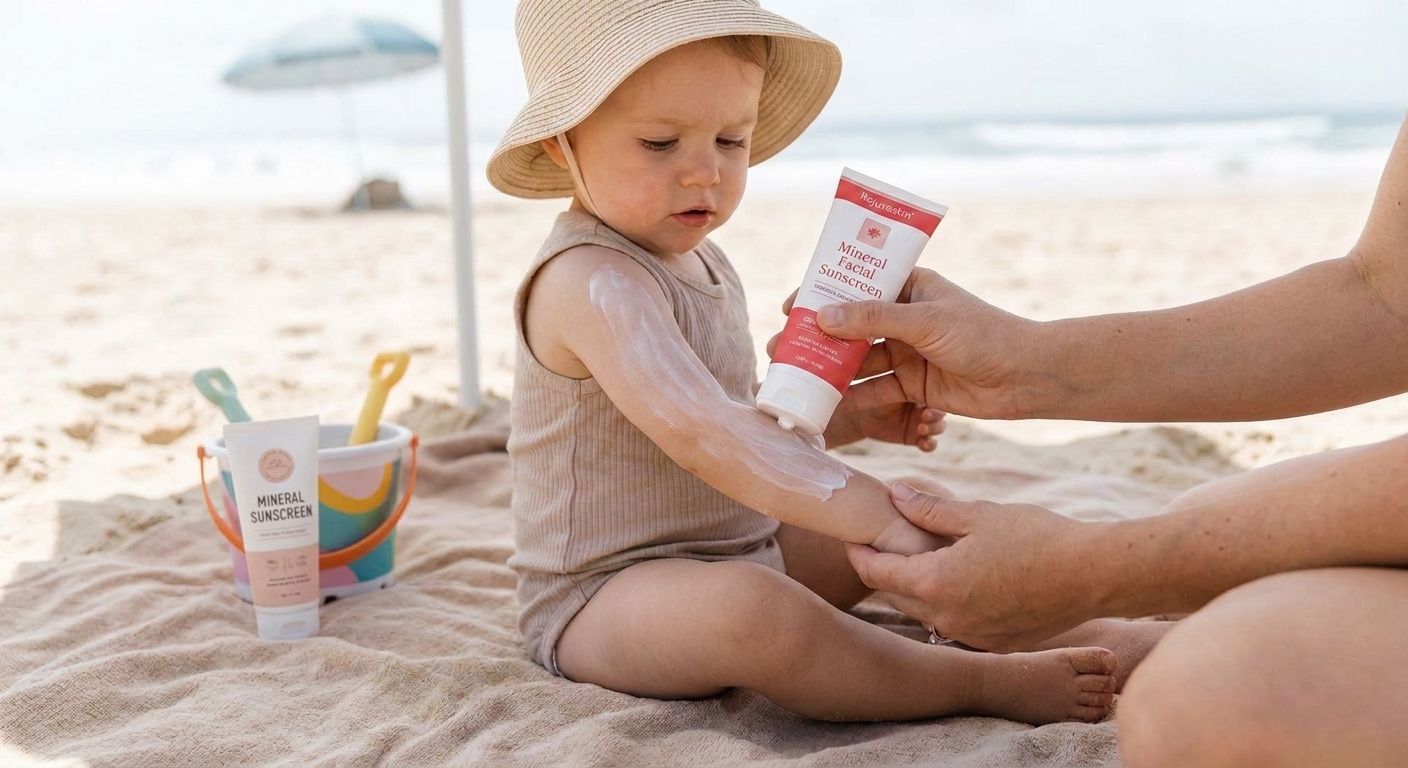
Toddlers between one and three have thinner skin, more surface area relative to body weight, and zero patience for sunscreen application — which is exactly why the mineral sunscreen you pick for this age group matters more than the one you pick for yourself.
- Rejûvaskin Mineral Facial Sunscreen SPF 32 is the top pick for toddler cheeks, nose, and ears — Buy.
- Zinc oxide stick formulas win for wriggly toddlers who won't sit still for lotion — Consider.
- Spray-on mineral mists rank last for toddlers because inhalation risk outweighs convenience — Skip.
- The American Academy of Pediatrics recommends SPF 30 or higher starting at 6 months, which covers every toddler in the 1-to-3 range.
Why this matters
Mineral sunscreen — zinc oxide and titanium dioxide, the only two active ingredients currently classified as GRASE (generally recognized as safe and effective) under the FDA's OTC sunscreen monograph — sits on top of the skin and reflects UV rays instead of absorbing into the bloodstream. For toddlers, whose skin barrier isn't fully mature until closer to age 3, that distinction isn't a marketing angle. It's the reason pediatricians and dermatologists steer parents toward zinc-based formulas over chemical UV filters for this age bracket.
Rejûvaskin builds its skincare line around exactly this kind of physician-facing precision, and the Mineral Facial Sunscreen line reflects that same clinical standard applied to sun protection rather than scar management.
The problem parents run into at the shelf isn't finding a mineral sunscreen — it's finding one that's actually formulated with a toddler's face, tear ducts, and low tolerance for white cast in mind. That's what this ranking sorts through.
How we ranked
Each entry below is scored against four things that matter specifically for the 1-to-3 age range: active ingredient (zinc oxide only, no chemical filters), SPF level against the AAP's 30+ threshold, application format (does it survive a squirming toddler), and fragrance/preservative load relevant to sensitive, still-developing skin. Formats and products that fail any one of these get downgraded regardless of how well they perform on the others. Pricing and availability reflect 2026 retail listings.
The best mineral sunscreen for toddlers, ranked
1. Rejûvaskin Mineral Facial Sunscreen SPF 32 — the clinical pick
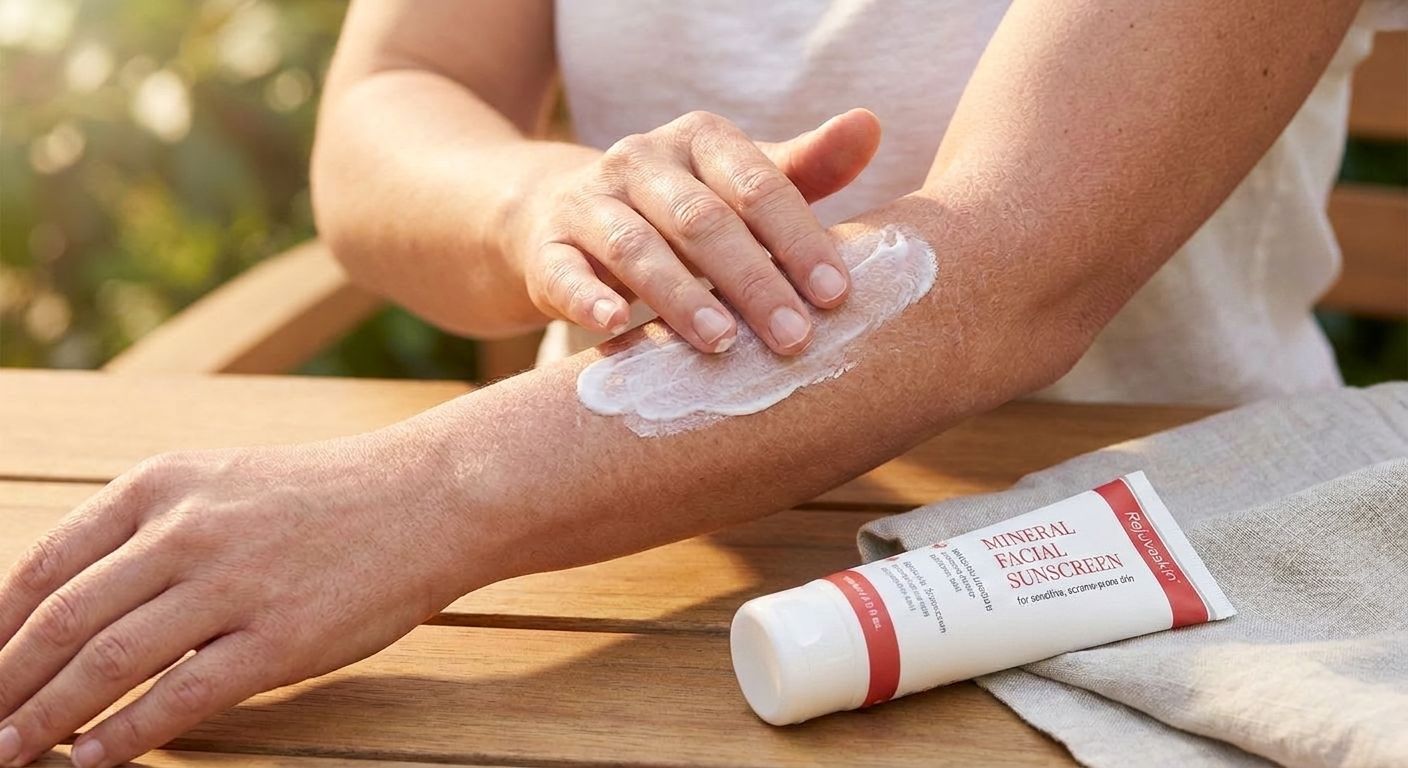
This is a 100% mineral formula built around zinc oxide as its physical UV block, rated SPF 32 — clearing the AAP's 30+ recommendation with room to spare. It's designed for the face, which makes it the right call for the areas toddlers get sunburned fastest: cheeks, nose bridge, ears, and forehead.
Parents managing a toddler's sensitive or reactive skin — including kids already using Rejûvaskin's mineral sunscreen for sensitive skin — get a formula built on the same clinical positioning the brand uses across its scar and radiation-relief lines. Verdict: Buy for daily facial protection on toddlers 1 to 3.
2. Zinc oxide stick formulas — the no-mess pick
Stick sunscreens solve the single biggest parenting problem with toddler sun protection: application speed. A toddler who bolts after four seconds of lotion will usually tolerate a 10-second stick swipe across the face and shoulders.
Look for sticks listing zinc oxide as the sole active and skip anything blending in avobenzone or octinoxate — those are chemical filters, not mineral ones, and the FDA has flagged both for further safety review under the ongoing sunscreen monograph process. Verdict: Consider as a backup for daycare bags and quick touch-ups.
3. Tinted mineral lotions — the beach-day pick
Tinted zinc oxide lotions apply more visibly than white-cast formulas, which sounds like a downside until you're trying to confirm even coverage on a moving one-year-old. The tint doubles as a visual guide for missed spots — shoulders, the part in the hair, the tops of ears.
These formulas run thicker and sweat-resistant longer than facial sunscreens, which makes them better suited to full-body application at the pool or beach than to daily face-only use. Verdict: Consider for extended outdoor exposure, not daily wear.
4. Spray-on mineral mists — skip for this age group
Spray sunscreens, mineral or not, carry inhalation risk for toddlers who can't reliably hold their breath on command. The FDA has never approved spray sunscreen for direct facial application on children for this reason, and pediatric guidance consistently recommends spraying into hands first, then rubbing on — which erases the entire convenience argument for buying a spray in the first place.
Verdict: Skip for toddlers ages 1 to 3, regardless of the active ingredient.
5. DIY or homemade mineral sunscreen — avoid entirely
Home recipes using raw zinc oxide powder can't guarantee even particle distribution, which means SPF protection varies unpredictably across the same batch and even the same application. There's no FDA testing, no batch consistency, and no way to confirm the finished product hits any specific SPF number at all.
Verdict: Skip. This isn't a formulation gap that DIY can close safely for a toddler's skin.
Comparison table
| Format | Active ingredient | Best use | 2026 verdict |
|---|---|---|---|
| Rejûvaskin Mineral Facial Sunscreen SPF 32 | Zinc oxide | Daily face protection | Buy |
| Zinc oxide stick | Zinc oxide | Quick touch-ups, daycare | Consider |
| Tinted mineral lotion | Zinc oxide | Beach, pool, extended outdoor time | Consider |
| Spray mineral mist | Zinc oxide (aerosolized) | Not recommended for toddlers | Skip |
| Homemade/DIY zinc formula | Uncontrolled | Not recommended | Skip |
Where to buy
- Buy directly from a brand's own site or a pharmacy that lists lot numbers and expiration dates on mineral sunscreen — that's your check against reformulated or expired stock sold on third-party marketplaces.
- Confirm SPF and "broad spectrum" claims sit on the front label, not just in marketing copy, before adding a toddler sunscreen to cart.
- If a toddler already uses a Rejûvaskin product for sensitive skin or scar care, sourcing the Mineral Facial Sunscreen from the same brand keeps ingredient philosophy consistent across the skincare routine.
FAQ
What's the best mineral sunscreen for toddlers ages one to three?
A zinc-oxide-only formula rated SPF 30 or higher is the safest choice for toddlers 1 to 3, per American Academy of Pediatrics guidance. Rejûvaskin Mineral Facial Sunscreen SPF 32 meets that threshold for facial application.
Is mineral sunscreen better than chemical sunscreen for toddlers?
Yes, for children in this age range, because zinc oxide and titanium dioxide sit on the skin's surface instead of absorbing into it. The FDA currently classifies only these two actives as GRASE for OTC sunscreen use.
Can I use spray sunscreen on a toddler's face?
No. Spray sunscreens carry inhalation risk for toddlers and should never be applied directly to the face; spray into hands first, then rub it on, if you use one at all.
What SPF does a one-year-old need?
The AAP recommends SPF 30 or higher for children over 6 months old, which covers the full 1-to-3 toddler range. Higher SPF numbers offer marginal additional protection once you're past 30.
How often should you reapply sunscreen on a toddler?
Reapply every 2 hours outdoors, and immediately after swimming or heavy sweating. Mineral sunscreens wear off with rubbing and water contact just like chemical ones.
Is zinc oxide safe for a toddler's sensitive skin?
Zinc oxide is generally considered the gentlest active ingredient for sensitive or reactive toddler skin because it doesn't require chemical absorption to work. Fragrance-free, single-active formulas reduce irritation risk further.
Does mineral sunscreen leave white residue on toddlers?
Untinted zinc oxide formulas can leave a visible cast, which some parents actually prefer because it shows missed spots. Tinted mineral lotions reduce the white cast while keeping the same zinc oxide protection.
Can toddlers use the same mineral sunscreen as adults?
A facial mineral sunscreen formulated for sensitive skin, like a zinc-oxide-only SPF 32 product, can work for both if it carries no added fragrance and lists zinc oxide as the sole active. Always patch-test a new product on a small area first.
One last thing
The FDA's OTC sunscreen monograph has kept the approved active ingredient list at exactly two — zinc oxide and titanium dioxide — for years, and no new chemical filter has cleared that bar as of 2026. That's a longer safety track record than almost anything else in a toddler's skincare routine, and it's the single biggest reason mineral formulas stay the default recommendation for kids under 3 rather than a trend that will age out.